Recipe totals, pantry deductions and example packages stay separate. Package sizes below are editable; 0 means buy exact weight.
Couscousdry · g
500g1 × 500g
Need 160g · Pantry used 0g · Net 160g · Remaining 340g
Example package: 500g usable quantity. Confirm label/edible weight.
Chickpeasdrained · g
480g2 × 240g
Need 480g · Pantry used 0g · Net 480g · Remaining 0g
Example: 400g gross can, 240g drained. Confirm your label.
Zucchiniraw · g
600gexact edible weight
Need 600g · Pantry used 0g · Net 600g · Remaining 0g
Buy exact edible weight; record any trimming losses.
Carrotsraw · g
1000g1 × 1000g
Need 600g · Pantry used 0g · Net 600g · Remaining 400g
Example package: 1000g usable quantity. Confirm label/edible weight.
Onionsraw · g
500g1 × 500g
Need 400g · Pantry used 0g · Net 400g · Remaining 100g
Example package: 500g usable quantity. Confirm label/edible weight.
Olive oilraw · ml
500ml1 × 500ml
Need 80ml · Pantry used 0ml · Net 80ml · Remaining 420ml
Example package: 500ml usable quantity. Confirm label/edible weight.
Lemon juiceraw · ml
250ml1 × 250ml
Need 40ml · Pantry used 0ml · Net 40ml · Remaining 210ml
Example package: 250ml usable quantity. Confirm label/edible weight.
Saltdry · g
250g1 × 250g
Need 15g · Pantry used 0g · Net 15g · Remaining 235g
Example package: 250g usable quantity. Confirm label/edible weight.
Black pepperdry · g
50g1 × 50g
Need 5g · Pantry used 0g · Net 5g · Remaining 45g
Example package: 50g usable quantity. Confirm label/edible weight.
Ricedry · g
500g1 × 500g
Need 160g · Pantry used 0g · Net 160g · Remaining 340g
Example package: 500g usable quantity. Confirm label/edible weight.
Black beansdrained · g
240g1 × 240g
Need 240g · Pantry used 0g · Net 240g · Remaining 0g
Example: 400g gross can, 240g drained. Confirm your label.
Bell pepperraw · g
300gexact edible weight
Need 300g · Pantry used 0g · Net 300g · Remaining 0g
Buy exact edible weight; record any trimming losses.
Fresh tomatoesraw · g
200gexact edible weight
Need 200g · Pantry used 0g · Net 200g · Remaining 0g
Buy exact edible weight; record any trimming losses.
Pastadry · g
500g1 × 500g
Need 160g · Pantry used 0g · Net 160g · Remaining 340g
Example package: 500g usable quantity. Confirm label/edible weight.
Canned tomatoescanned · g
800g2 × 400g
Need 800g · Pantry used 0g · Net 800g · Remaining 0g
Example package: 400g usable quantity. Confirm label/edible weight.
Plain flour tortillascooked · count
8 pieces1 × 8 pieces
Need 4 pieces · Pantry used 0 pieces · Net 4 pieces · Remaining 4 pieces
Reference recipe: wheat, water, oil, salt. Check the actual brand for milk, soy and other ingredients.
Cabbageraw · g
800g1 × 800g
Need 400g · Pantry used 0g · Net 400g · Remaining 400g
Example package: 800g usable quantity. Confirm label/edible weight.
Plain yogurtraw · g
500g1 × 500g
Need 120g · Pantry used 0g · Net 120g · Remaining 380g
Example package: 500g usable quantity. Confirm label/edible weight.
Red lentilsdry · g
500g1 × 500g
Need 160g · Pantry used 0g · Net 160g · Remaining 340g
Example package: 500g usable quantity. Confirm label/edible weight.
Plain breadcooked · g
400g1 × 400g
Need 160g · Pantry used 0g · Net 160g · Remaining 240g
Reference loaf: wheat, water, yeast, salt. Actual products may differ.
Recipe water: 1400ml. Extra pasta processing water: about 2L per two servings per pasta dinner; chickpea warming water: 10–20ml per two servings. Processing water is separate and not a store purchase.
Your prep & storage plan
Roast once for Monday and Wednesday; freeze Friday’s soup on prep day.
Prep begins at 19:00 on the day before your first dinner. Active work and waiting are scheduled separately.
Choose what to make ahead, then apply changes. Prepare everything else fresh on its dinner day. Weigh each finished batch and divide it into its labelled equal shares.
Shared roasted vegetables
Prep ahead
2 equal shares · 2 servings per share
Mon, Oct 5: Lemon chickpea couscous · Wed, Oct 7: Roast vegetable pasta
Prepare this component
600g Zucchini
300g Carrots
200g Onions
40ml Olive oil
4g Salt
2g Black pepper
Heat the oven to 200°C. Cut zucchini into 2cm pieces, carrots into 1cm pieces and onion into 2cm wedges. Toss 600g zucchini, 300g carrots, 200g onions, 40ml olive oil, 4g salt and 2g black pepper.
Spread in one uncrowded layer. Roast for 25–35 minutes, turning halfway, until carrots yield to a fork and the edges brown. Split crowded trays into separate oven loads.
Weigh output Y, divide into the labelled shares and chill promptly in shallow containers.
Finish at dinner
Use one original labelled share. Reheat the cooked vegetables to 74°C, checked with a thermometer, then follow the dinner’s fresh finishing steps.
Weigh the cooked output Y and divide it equally. Raw ingredient amounts are accounting equivalents, not cooked weights.
Refrigerated planning window: up to 72 hours, shortened by any earlier product or opened-food limit. Freeze promptly when the plan calls for it.
Apply pantry and dinner changes first. Then confirm the actual finish time and storage. Recording consumes allocated raw stock once and preserves this batch’s original shares.
Leave blank to use the end of this plan’s prep session.
Pepper and black bean topping
Cook fresh
1 equal share · 2 servings per share
Tue, Oct 6: Bean rice bowls
Prepare this component
240g Black beans
300g Bell pepper
100g Onions
200g Fresh tomatoes
15ml Olive oil
3g Salt
1g Black pepper
Cut 100g onions into 5mm dice, 300g bell pepper into 1cm squares and 200g fresh tomatoes into 1cm pieces. Heat 15ml olive oil in a broad skillet over medium heat. Cook the onion for 3 minutes, then add the pepper and cook for 6–8 minutes until softened and lightly golden. Lower the heat if the edges darken before the centres soften.
Add the diced tomato, 240g black beans, 3g salt and 1g black pepper. Simmer uncovered for 5–7 minutes until the tomato breaks down and the beans steam throughout. If the topping is watery, simmer uncovered another 2 minutes; if dry, add a splash of processing water.
The displayed quantities already match your selected servings. For 1 or 2 servings, use a smaller pan and check early; keep the stated cut sizes. For 4 servings use a broad pan or uncrowded trays; for 8 split every ingredient evenly into two 4-serving batches (more if the pan or pot capacity requires it). Keep pans below 80% full and vegetables in one layer when browning. Repeat the cooking and doneness checks for each batch; elapsed time increases for sequential batches.
Serve promptly. Cool any extra cooked food in shallow containers and refrigerate within two hours, or one hour above 32°C. Keep the fridge at 4°C or below. Reheat cooked leftovers evenly to 74°C, checking several places with a food thermometer. Keep raw garnishes and cold yogurt or tahini sauces separate and use them cold within their label limits.
Finish at dinner
Use the labelled component for this dinner. If frozen promptly, thaw in the fridge the previous evening; if still frozen, heat gently from frozen, stirring where possible. Reheat cooked food evenly to 74°C with a thermometer before the fresh finishing steps. Add a splash of processing water if it catches, recording any extra water.
With two burners, cook the rice while making the skillet topping; with one burner, finish the topping first and allow extra time. Rinse 160g rice. Put it in a fitted-lid saucepan with 300ml recipe water, checking the packet ratio first. Bring to a boil, reduce to low, cover and cook for 12–18 minutes until the liquid is absorbed and a grain is tender. If still chalky, add a little boiling processing water and cover for 3 minutes more. Rest off the heat for 5 minutes.
Fluff the rice and divide it into bowls. Spoon the hot bean topping over it just before serving.
Freeze promptly on preparation day for dinners outside the refrigerated window. Texture may soften after freezing; keep the fresh finish separate.
Refrigerated planning window: up to 72 hours, shortened by any earlier product or opened-food limit. Freeze promptly when the plan calls for it.
Apply pantry and dinner changes first. Then confirm the actual finish time and storage. Recording consumes allocated raw stock once and preserves this batch’s original shares.
Leave blank to use the end of this plan’s prep session.
Warm chickpea filling
Cook fresh
1 equal share · 2 servings per share
Thu, Oct 8: Chickpea wraps
Prepare this component
240g Chickpeas
10ml Olive oil
3g Salt
Drain 240g chickpeas. Heat 10ml olive oil in a skillet over medium-low heat, add the chickpeas and 3g salt, then cook for 5–7 minutes until steaming throughout. Crush a quarter of the beans with a spoon so the filling stays inside the wrap. Add a splash of processing water if they stick.
The displayed quantities already match your selected servings. For 1 or 2 servings, use a smaller pan and check early; keep the stated cut sizes. For 4 servings use a broad pan or uncrowded trays; for 8 split every ingredient evenly into two 4-serving batches (more if the pan or pot capacity requires it). Keep pans below 80% full and vegetables in one layer when browning. Repeat the cooking and doneness checks for each batch; elapsed time increases for sequential batches.
Serve promptly. Cool any extra cooked food in shallow containers and refrigerate within two hours, or one hour above 32°C. Keep the fridge at 4°C or below. Reheat cooked leftovers evenly to 74°C, checking several places with a food thermometer. Keep raw garnishes and cold yogurt or tahini sauces separate and use them cold within their label limits.
Finish at dinner
Use the labelled component for this dinner. If frozen promptly, thaw in the fridge the previous evening; if still frozen, heat gently from frozen, stirring where possible. Reheat cooked food evenly to 74°C with a thermometer before the fresh finishing steps. Add a splash of processing water if it catches, recording any extra water.
Wash and dry 200g cabbage; shred into 2mm ribbons. Grate 150g carrots coarsely. Stir 120g plain yogurt, 20ml lemon juice and 1g black pepper until smooth. Keep the vegetables and sauce cold while the filling heats; check actual yogurt and tortilla labels.
Warm 4 pieces plain flour tortillas in a dry skillet over medium heat for 20–30 seconds per side until flexible, or follow the packet. Cover with a clean towel; reduce heat if the edges become brittle.
Distribute the warm filling, raw vegetables and yogurt sauce evenly between the tortillas. Fold in the sides and roll firmly. Add the cold sauce only when serving; refrigerate leftover sauce separately and do not reheat it with the filling.
Freeze promptly on preparation day for dinners outside the refrigerated window. Texture may soften after freezing; keep the fresh finish separate.
Refrigerated planning window: up to 72 hours, shortened by any earlier product or opened-food limit. Freeze promptly when the plan calls for it.
Apply pantry and dinner changes first. Then confirm the actual finish time and storage. Recording consumes allocated raw stock once and preserves this batch’s original shares.
Leave blank to use the end of this plan’s prep session.
Lentil tomato soup
Prep ahead
1 equal share · 2 servings per share
Fri, Oct 9: Lentil tomato soup with bread
Prepare this component
160g Red lentils
400g Canned tomatoes
150g Carrots
100g Onions
200g Cabbage
15ml Olive oil
3g Salt
1g Black pepper
800ml Recipe water
Sort and rinse 160g red lentils. Cut 150g carrots into 8mm dice and 100g onions into 5mm dice; shred 200g cabbage into 5mm ribbons. Heat 15ml olive oil in a large pot over medium heat. Soften onion and carrot for 5 minutes, stirring; reduce heat if onion starts to scorch.
Add the lentils, 400g canned tomatoes and 800ml recipe water. Bring to a boil, reduce to a gentle simmer and partly cover for 20–30 minutes, stirring the bottom every 5 minutes, until lentils collapse when pressed. If still firm, add a little hot processing water and continue simmering; record added water.
Stir in the cabbage, 3g salt and 1g black pepper. Simmer for 5–8 minutes until cabbage ribs are tender. The soup should pour from a ladle; add a little processing water if it has become a paste.
The displayed quantities already match your selected servings. For 1 serving use a small covered pot and check liquid early; for 2 use the stated method. For 4 or 8 use the planned pot-capacity batches and divide every ingredient proportionally. Keep each pot below 80% full. Maintain a gentle simmer and judge each batch by texture, not by multiplying the cooking time.
Serve promptly. Cool any extra cooked food in shallow containers and refrigerate within two hours, or one hour above 32°C. Keep the fridge at 4°C or below. Reheat cooked leftovers evenly to 74°C, checking several places with a food thermometer. Keep raw garnishes and cold yogurt or tahini sauces separate and use them cold within their label limits.
Finish at dinner
Use the labelled component for this dinner. If frozen promptly, thaw in the fridge the previous evening; if still frozen, heat gently from frozen, stirring where possible. Reheat cooked food evenly to 74°C with a thermometer before the fresh finishing steps. Add a splash of processing water if it catches, recording any extra water.
Serve the soup with 160g plain bread on the side. If this is a late-week prep dinner, portion and freeze the soup promptly on preparation day; keep the bread separate until the dinner.
Freeze promptly on preparation day for dinners outside the refrigerated window. Texture may soften after freezing; keep the fresh finish separate.
Refrigerated planning window: up to 72 hours, shortened by any earlier product or opened-food limit. Freeze promptly when the plan calls for it.
Apply pantry and dinner changes first. Then confirm the actual finish time and storage. Recording consumes allocated raw stock once and preserves this batch’s original shares.
Leave blank to use the end of this plan’s prep session.
Heat the oven to 200°C. Cut zucchini into 2cm pieces, carrots into 1cm pieces and onion into 2cm wedges. Toss 600g zucchini, 300g carrots, 200g onions, 40ml olive oil, 4g salt and 2g black pepper.
19:20–19:50
Spread in one uncrowded layer. Roast for 25–35 minutes, turning halfway, until carrots yield to a fork and the edges brown. Split crowded trays into separate oven loads.
19:50–19:55
Weigh actual cooked output Y. Divide into 2 equal shares (Y/2), label dates and chill promptly in shallow containers. Raw-equivalent weights are accounting only.
19:55–20:43
Prepare Lentil tomato soup in 1 load(s). Sort and rinse 160g red lentils. Cut 150g carrots into 8mm dice and 100g onions into 5mm dice; shred 200g cabbage into 5mm ribbons. Heat 15ml olive oil in a large pot over medium heat. Soften onion and carrot for 5 minutes, stirring; reduce heat if onion starts to scorch. Add the lentils, 400g canned tomatoes and 800ml recipe water. Bring to a boil, reduce to a gentle simmer and partly cover for 20–30 minutes, stirring the bottom every 5 minutes, until lentils collapse when pressed. If still firm, add a little hot processing water and continue simmering; record added water. Stir in the cabbage, 3g salt and 1g black pepper. Simmer for 5–8 minutes until cabbage ribs are tender. The soup should pour from a ladle; add a little processing water if it has become a paste. The displayed quantities already match your selected servings. For 1 serving use a small covered pot and check liquid early; for 2 use the stated method. For 4 or 8 use the planned pot-capacity batches and divide every ingredient proportionally. Keep each pot below 80% full. Maintain a gentle simmer and judge each batch by texture, not by multiplying the cooking time. Serve promptly. Cool any extra cooked food in shallow containers and refrigerate within two hours, or one hour above 32°C. Keep the fridge at 4°C or below. Reheat cooked leftovers evenly to 74°C, checking several places with a food thermometer. Keep raw garnishes and cold yogurt or tahini sauces separate and use them cold within their label limits.
20:43–20:48
Divide Lentil tomato soup into 1 labelled Y/1 shares. Chill promptly in shallow containers; refrigerate or freeze within 2 hours, or 1 hour above 32°C.
Storage and dinner-day reminders
Lemon chickpea couscous · Mon, Oct 5
Refrigerate · portion Y/2. Refrigerate promptly at 4°C or below. Reheat cooked food to 74°C, checked with a thermometer.
Planned refrigerated interval: 22.1 hours.
Roast vegetable pasta · Wed, Oct 7
Refrigerate · portion Y/2. Refrigerate promptly at 4°C or below. Reheat cooked food to 74°C, checked with a thermometer.
Planned refrigerated interval: 70.1 hours.
Lentil tomato soup with bread · Fri, Oct 9
Freeze promptly on prep day · portion Y/1. Freeze promptly at −18°C; thaw in the refrigerator. Reheat cooked food to 74°C, checked with a thermometer.
Planned move to the fridge: 2026-10-08 at 20:00. Follow the component’s finishing instructions.
Chill perishable food promptly in shallow containers: within two hours, or one hour above 32°C. Fridge ≤4°C; freezer ≤−18°C. Follow each component’s storage and finishing instructions; raw vegetables and cold sauces are kept separate. A temperature check cannot undo unsafe storage. Storage guide & sources
Portion labels
Y is the actual measured finished batch. Y/N means one of N equal shares; it is not an estimated cooked weight. Planned labels need the actual finish time when you prepare the food.
Shared roasted vegetables
planned
Share 1 · Y/2 · 2 servings
Planned prep finish
2026-10-04 at 19:55
Storage
refrigerated
Use by
2026-10-07 at 19:55
Dinner
Mon, Oct 5
Lemon chickpea couscous
Refrigerate promptly at 4°C or below. Reheat cooked food to 74°C, checked with a thermometer.
Shared roasted vegetables
planned
Share 2 · Y/2 · 2 servings
Planned prep finish
2026-10-04 at 19:55
Storage
refrigerated
Use by
2026-10-07 at 19:55
Dinner
Wed, Oct 7
Roast vegetable pasta
Refrigerate promptly at 4°C or below. Reheat cooked food to 74°C, checked with a thermometer.
Lentil tomato soup
planned
Share 1 · Y/1 · 2 servings
Planned prep finish
2026-10-04 at 20:48
Storage
frozen
Freeze promptly
2026-10-04 at 20:48
Planned move to fridge
2026-10-08 at 20:00
Use by
2026-10-09 at 20:00
Dinner
Fri, Oct 9
Lentil tomato soup with bread
Freeze promptly at −18°C; thaw in the refrigerator. Reheat cooked food to 74°C, checked with a thermometer.
What remains
These amounts come from this plan. Package surplus assumes you buy the listed quantities. Keep actual purchase amounts and product labels up to date.
Unallocated ingredients
Couscous340g · drySurplus from the planned purchase
Package surplus if you buy the listed amount. Record the actual package use-by and opening date; keep it separate from existing lots.
Carrots400g · rawSurplus from the planned purchase
Package surplus if you buy the listed amount. Record the actual package use-by and opening date; keep it separate from existing lots.
Onions100g · rawSurplus from the planned purchase
Package surplus if you buy the listed amount. Record the actual package use-by and opening date; keep it separate from existing lots.
Olive oil420ml · rawSurplus from the planned purchase
Package surplus if you buy the listed amount. Record the actual package use-by and opening date; keep it separate from existing lots.
Lemon juice210ml · rawSurplus from the planned purchase
Package surplus if you buy the listed amount. Record the actual package use-by and opening date; keep it separate from existing lots.
Salt235g · drySurplus from the planned purchase
Package surplus if you buy the listed amount. Record the actual package use-by and opening date; keep it separate from existing lots.
Black pepper45g · drySurplus from the planned purchase
Package surplus if you buy the listed amount. Record the actual package use-by and opening date; keep it separate from existing lots.
Rice340g · drySurplus from the planned purchase
Package surplus if you buy the listed amount. Record the actual package use-by and opening date; keep it separate from existing lots.
Pasta340g · drySurplus from the planned purchase
Package surplus if you buy the listed amount. Record the actual package use-by and opening date; keep it separate from existing lots.
Plain flour tortillas4 pieces · cookedSurplus from the planned purchase
Package surplus if you buy the listed amount. Record the actual package use-by and opening date; keep it separate from existing lots.
Cabbage400g · rawSurplus from the planned purchase
Package surplus if you buy the listed amount. Record the actual package use-by and opening date; keep it separate from existing lots.
Plain yogurt380g · rawSurplus from the planned purchase
Package surplus if you buy the listed amount. Record the actual package use-by and opening date; keep it separate from existing lots.
Red lentils340g · drySurplus from the planned purchase
Package surplus if you buy the listed amount. Record the actual package use-by and opening date; keep it separate from existing lots.
Plain bread240g · cookedSurplus from the planned purchase
Package surplus if you buy the listed amount. Record the actual package use-by and opening date; keep it separate from existing lots.
Prepared shares
No prepared shares are reserved. Skipping or replacing a dinner keeps its already prepared share here.
Before you cook
Reference packaged-food ingredients may differ by brand. Check actual labels and cross-contact information. Exclusions filter recipe ingredients and cannot certify allergy safety.
Five dinners, step by step
01
Mon, Oct 5
Lemon chickpea couscous
2 servings · 15 min active (base recipe) · 12 min planned finish · stove, oven · Roast trays
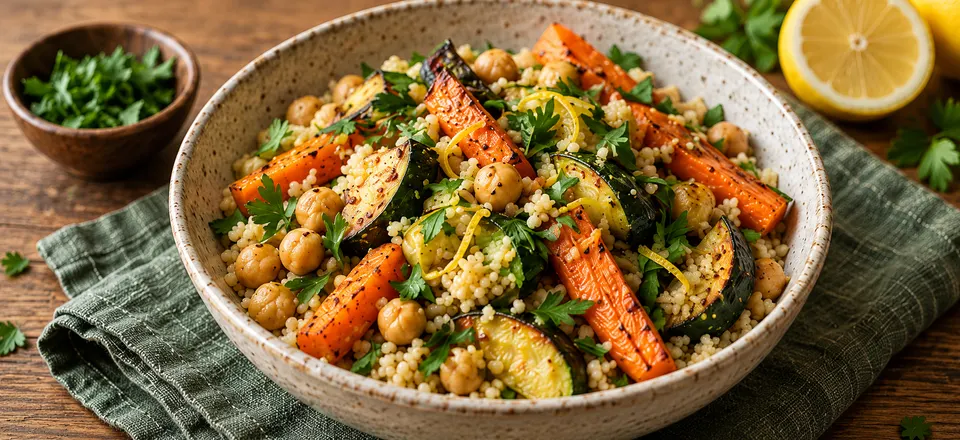
Tender roasted carrots, zucchini and onion over fluffy couscous with warm lemon chickpeas.
Use 1 batch(es) with your 4L pot. Keep each load below 80% of capacity; roast no more than four servings per tray.
Shared roasted vegetables: Use the labelled share from your prep session. Planned prep finish 2026-10-04 at 19:55.
Ingredient notes show how much is included in your prep share and any amount still needed fresh. The quantities on the right are the full dinner totals.
Use one original labelled share. Reheat the cooked vegetables to 74°C, checked with a thermometer, then follow the dinner’s fresh finishing steps.
While the vegetables roast, cook this component on the stove. Bring 200ml recipe water to a boil in a saucepan. Stir in 160g couscous, cover and remove from the heat for 5 minutes; fluff with a fork. Check the packet liquid ratio before cooking and record any adjustment. If grains remain hard, sprinkle in a little boiling processing water and cover for 2 minutes more.
While the vegetables roast, cook this component on the stove. Warm 240g chickpeas in a saucepan with 10–20ml processing water per two servings over medium-low heat for 5 minutes, stirring until steaming. Stir in 20ml lemon juice and the remaining third of the measured salt.
Spoon couscous into bowls and add the chickpeas and this dinner’s entire roast share. Each fresh recipe makes one dinner; a shared batch has separately labelled shares for its other dinners.
The displayed quantities already match your selected servings. For 1 or 2 servings, use a smaller pan and check early; keep the stated cut sizes. For 4 servings use a broad pan or uncrowded trays; for 8 split every ingredient evenly into two 4-serving batches (more if the pan or pot capacity requires it). Keep pans below 80% full and vegetables in one layer when browning. Repeat the cooking and doneness checks for each batch; elapsed time increases for sequential batches. Serve promptly. Cool any extra cooked food in shallow containers and refrigerate within two hours, or one hour above 32°C. Keep the fridge at 4°C or below. Reheat cooked leftovers evenly to 74°C, checking several places with a food thermometer. Keep raw garnishes and cold yogurt or tahini sauces separate and use them cold within their label limits.
Full method for cooking fresh
Heat the oven to 200°C. Cut 300g zucchini into 2cm chunks, 150g carrots into 1cm pieces and 100g onions into 2cm wedges. Toss with 20ml olive oil, two-thirds of 3g salt and 1g black pepper. Spread in one layer and roast for 25–30 minutes, turning halfway, until the carrot yields to a fork and the edges brown. If the zucchini releases a puddle, spread onto another tray and continue roasting. For the shared-prep path use only this dinner’s labelled roast share, reheated to 74°C; skip this fresh roasting step.
While the vegetables roast, cook this component on the stove. Bring 200ml recipe water to a boil in a saucepan. Stir in 160g couscous, cover and remove from the heat for 5 minutes; fluff with a fork. Check the packet liquid ratio before cooking and record any adjustment. If grains remain hard, sprinkle in a little boiling processing water and cover for 2 minutes more.
While the vegetables roast, cook this component on the stove. Warm 240g chickpeas in a saucepan with 10–20ml processing water per two servings over medium-low heat for 5 minutes, stirring until steaming. Stir in 20ml lemon juice and the remaining third of the measured salt.
Spoon couscous into bowls and add the chickpeas and this dinner’s entire roast share. Each fresh recipe makes one dinner; a shared batch has separately labelled shares for its other dinners.
The displayed quantities already match your selected servings. For 1 or 2 servings, use a smaller pan and check early; keep the stated cut sizes. For 4 servings use a broad pan or uncrowded trays; for 8 split every ingredient evenly into two 4-serving batches (more if the pan or pot capacity requires it). Keep pans below 80% full and vegetables in one layer when browning. Repeat the cooking and doneness checks for each batch; elapsed time increases for sequential batches. Serve promptly. Cool any extra cooked food in shallow containers and refrigerate within two hours, or one hour above 32°C. Keep the fridge at 4°C or below. Reheat cooked leftovers evenly to 74°C, checking several places with a food thermometer. Keep raw garnishes and cold yogurt or tahini sauces separate and use them cold within their label limits.
02
Tue, Oct 6
Bean rice bowls
2 servings · 15 min active (base recipe) · 35 min planned finish · stove · Sauté and toss
A soft pepper, tomato and black bean skillet served over separately cooked rice.
Use 1 batch(es) with your 4L pot. Keep each load below 80% of capacity; roast no more than four servings per tray.
Cut 100g onions into 5mm dice, 300g bell pepper into 1cm squares and 200g fresh tomatoes into 1cm pieces. Heat 15ml olive oil in a broad skillet over medium heat. Cook the onion for 3 minutes, then add the pepper and cook for 6–8 minutes until softened and lightly golden. Lower the heat if the edges darken before the centres soften.
Add the diced tomato, 240g black beans, 3g salt and 1g black pepper. Simmer uncovered for 5–7 minutes until the tomato breaks down and the beans steam throughout. If the topping is watery, simmer uncovered another 2 minutes; if dry, add a splash of processing water.
With two burners, cook the rice while making the skillet topping; with one burner, finish the topping first and allow extra time. Rinse 160g rice. Put it in a fitted-lid saucepan with 300ml recipe water, checking the packet ratio first. Bring to a boil, reduce to low, cover and cook for 12–18 minutes until the liquid is absorbed and a grain is tender. If still chalky, add a little boiling processing water and cover for 3 minutes more. Rest off the heat for 5 minutes.
Fluff the rice and divide it into bowls. Spoon the hot bean topping over it just before serving.
The displayed quantities already match your selected servings. For 1 or 2 servings, use a smaller pan and check early; keep the stated cut sizes. For 4 servings use a broad pan or uncrowded trays; for 8 split every ingredient evenly into two 4-serving batches (more if the pan or pot capacity requires it). Keep pans below 80% full and vegetables in one layer when browning. Repeat the cooking and doneness checks for each batch; elapsed time increases for sequential batches. Serve promptly. Cool any extra cooked food in shallow containers and refrigerate within two hours, or one hour above 32°C. Keep the fridge at 4°C or below. Reheat cooked leftovers evenly to 74°C, checking several places with a food thermometer. Keep raw garnishes and cold yogurt or tahini sauces separate and use them cold within their label limits. For this planner, refrigerate cooked rice for at most 24 hours or freeze promptly on the preparation day after rapid cooling in shallow containers. This 24-hour rice limit is a conservative product choice, not a USDA-specific rice rule. Reheat the cooked portion evenly to 74°C with a thermometer.
03
Wed, Oct 7
Roast vegetable pasta
2 servings · 12 min active (base recipe) · 20 min planned finish · stove, oven · Roast trays
An uncrowded tray of caramelized vegetables folded through a simple tomato pasta sauce.
Use 1 batch(es) with your 4L pot. Keep each load below 80% of capacity; roast no more than four servings per tray.
Shared roasted vegetables: Use the labelled share from your prep session. Planned prep finish 2026-10-04 at 19:55.
Ingredient notes show how much is included in your prep share and any amount still needed fresh. The quantities on the right are the full dinner totals.
Use one original labelled share. Reheat the cooked vegetables to 74°C, checked with a thermometer, then follow the dinner’s fresh finishing steps.
Simmer 400g canned tomatoes with 100ml recipe water and the remaining third of the measured salt over medium-low heat for 8–10 minutes, stirring until a spoon leaves a brief track. Add the roast share; if previously cooked and chilled, heat evenly to 74°C with a thermometer. Loosen a thick sauce with a little processing water.
Start the pasta water while the roast finishes, using a separate pot from the tomato sauce. Boil about 2L processing water per two servings in a large pot. Add 160g pasta and cook for 8–12 minutes or the packet time, stirring early to prevent sticking. Taste a piece: the centre should be firm but no longer hard. Drain, retaining a little cooking water.
Toss the pasta with the vegetable sauce over low heat for 1 minute. Add a spoonful of retained cooking water if the sauce clumps, then serve immediately.
The displayed quantities already match your selected servings. For 1 or 2 servings, use a smaller pan and check early; keep the stated cut sizes. For 4 servings use a broad pan or uncrowded trays; for 8 split every ingredient evenly into two 4-serving batches (more if the pan or pot capacity requires it). Keep pans below 80% full and vegetables in one layer when browning. Repeat the cooking and doneness checks for each batch; elapsed time increases for sequential batches. Serve promptly. Cool any extra cooked food in shallow containers and refrigerate within two hours, or one hour above 32°C. Keep the fridge at 4°C or below. Reheat cooked leftovers evenly to 74°C, checking several places with a food thermometer. Keep raw garnishes and cold yogurt or tahini sauces separate and use them cold within their label limits.
Full method for cooking fresh
Heat the oven to 200°C. Cut 300g zucchini into 2cm pieces, 150g carrots into 1cm pieces and 100g onions into 2cm wedges. Toss with 20ml olive oil, two-thirds of 3g salt and 1g black pepper. Roast in one layer for 25–30 minutes, turning once, until carrots are tender and vegetable edges brown. Split crowded trays if vegetables steam. For shared preparation, skip this step and use only the labelled roast share for this dinner.
Simmer 400g canned tomatoes with 100ml recipe water and the remaining third of the measured salt over medium-low heat for 8–10 minutes, stirring until a spoon leaves a brief track. Add the roast share; if previously cooked and chilled, heat evenly to 74°C with a thermometer. Loosen a thick sauce with a little processing water.
Start the pasta water while the roast finishes, using a separate pot from the tomato sauce. Boil about 2L processing water per two servings in a large pot. Add 160g pasta and cook for 8–12 minutes or the packet time, stirring early to prevent sticking. Taste a piece: the centre should be firm but no longer hard. Drain, retaining a little cooking water.
Toss the pasta with the vegetable sauce over low heat for 1 minute. Add a spoonful of retained cooking water if the sauce clumps, then serve immediately.
The displayed quantities already match your selected servings. For 1 or 2 servings, use a smaller pan and check early; keep the stated cut sizes. For 4 servings use a broad pan or uncrowded trays; for 8 split every ingredient evenly into two 4-serving batches (more if the pan or pot capacity requires it). Keep pans below 80% full and vegetables in one layer when browning. Repeat the cooking and doneness checks for each batch; elapsed time increases for sequential batches. Serve promptly. Cool any extra cooked food in shallow containers and refrigerate within two hours, or one hour above 32°C. Keep the fridge at 4°C or below. Reheat cooked leftovers evenly to 74°C, checking several places with a food thermometer. Keep raw garnishes and cold yogurt or tahini sauces separate and use them cold within their label limits.
04
Thu, Oct 8
Chickpea wraps
2 servings · 15 min active (base recipe) · 20 min planned finish · stove · Warm wraps and toast
Warm chickpeas wrapped with crunchy cabbage, grated carrot and a cool lemon yogurt sauce.
Use 1 batch(es) with your 4L pot. Keep each load below 80% of capacity; roast no more than four servings per tray.
Drain 240g chickpeas. Heat 10ml olive oil in a skillet over medium-low heat, add the chickpeas and 3g salt, then cook for 5–7 minutes until steaming throughout. Crush a quarter of the beans with a spoon so the filling stays inside the wrap. Add a splash of processing water if they stick.
Wash and dry 200g cabbage; shred into 2mm ribbons. Grate 150g carrots coarsely. Stir 120g plain yogurt, 20ml lemon juice and 1g black pepper until smooth. Keep the vegetables and sauce cold while the filling heats; check actual yogurt and tortilla labels.
Warm 4 pieces plain flour tortillas in a dry skillet over medium heat for 20–30 seconds per side until flexible, or follow the packet. Cover with a clean towel; reduce heat if the edges become brittle.
Distribute the warm filling, raw vegetables and yogurt sauce evenly between the tortillas. Fold in the sides and roll firmly. Add the cold sauce only when serving; refrigerate leftover sauce separately and do not reheat it with the filling.
The displayed quantities already match your selected servings. For 1 or 2 servings, use a smaller pan and check early; keep the stated cut sizes. For 4 servings use a broad pan or uncrowded trays; for 8 split every ingredient evenly into two 4-serving batches (more if the pan or pot capacity requires it). Keep pans below 80% full and vegetables in one layer when browning. Repeat the cooking and doneness checks for each batch; elapsed time increases for sequential batches. Serve promptly. Cool any extra cooked food in shallow containers and refrigerate within two hours, or one hour above 32°C. Keep the fridge at 4°C or below. Reheat cooked leftovers evenly to 74°C, checking several places with a food thermometer. Keep raw garnishes and cold yogurt or tahini sauces separate and use them cold within their label limits.
05
Fri, Oct 9
Lentil tomato soup with bread
2 servings · 15 min active (base recipe) · 10 min planned finish · stove · Soups, stews and sauces
Red lentils thicken a tomato and cabbage soup, with bread kept dry until serving.
Use 1 batch(es) with your 4L pot. Keep each load below 80% of capacity; roast no more than four servings per tray.
Lentil tomato soup: Use the labelled share from your prep session. Planned prep finish 2026-10-04 at 20:48. Follow its thawing and finishing instructions.
Ingredient notes show how much is included in your prep share and any amount still needed fresh. The quantities on the right are the full dinner totals.
Use the labelled component for this dinner. If frozen promptly, thaw in the fridge the previous evening; if still frozen, heat gently from frozen, stirring where possible. Reheat cooked food evenly to 74°C with a thermometer before the fresh finishing steps. Add a splash of processing water if it catches, recording any extra water.
Serve the soup with 160g plain bread on the side. If this is a late-week prep dinner, portion and freeze the soup promptly on preparation day; keep the bread separate until the dinner.
Full method for cooking fresh
Sort and rinse 160g red lentils. Cut 150g carrots into 8mm dice and 100g onions into 5mm dice; shred 200g cabbage into 5mm ribbons. Heat 15ml olive oil in a large pot over medium heat. Soften onion and carrot for 5 minutes, stirring; reduce heat if onion starts to scorch.
Add the lentils, 400g canned tomatoes and 800ml recipe water. Bring to a boil, reduce to a gentle simmer and partly cover for 20–30 minutes, stirring the bottom every 5 minutes, until lentils collapse when pressed. If still firm, add a little hot processing water and continue simmering; record added water.
Stir in the cabbage, 3g salt and 1g black pepper. Simmer for 5–8 minutes until cabbage ribs are tender. The soup should pour from a ladle; add a little processing water if it has become a paste.
Serve the soup with 160g plain bread on the side. If this is a late-week prep dinner, portion and freeze the soup promptly on preparation day; keep the bread separate until the dinner.
The displayed quantities already match your selected servings. For 1 serving use a small covered pot and check liquid early; for 2 use the stated method. For 4 or 8 use the planned pot-capacity batches and divide every ingredient proportionally. Keep each pot below 80% full. Maintain a gentle simmer and judge each batch by texture, not by multiplying the cooking time. Serve promptly. Cool any extra cooked food in shallow containers and refrigerate within two hours, or one hour above 32°C. Keep the fridge at 4°C or below. Reheat cooked leftovers evenly to 74°C, checking several places with a food thermometer. Keep raw garnishes and cold yogurt or tahini sauces separate and use them cold within their label limits.
Original recipes · Content edition 3 · Serving equivalents are cooking quantities. How this planner works